


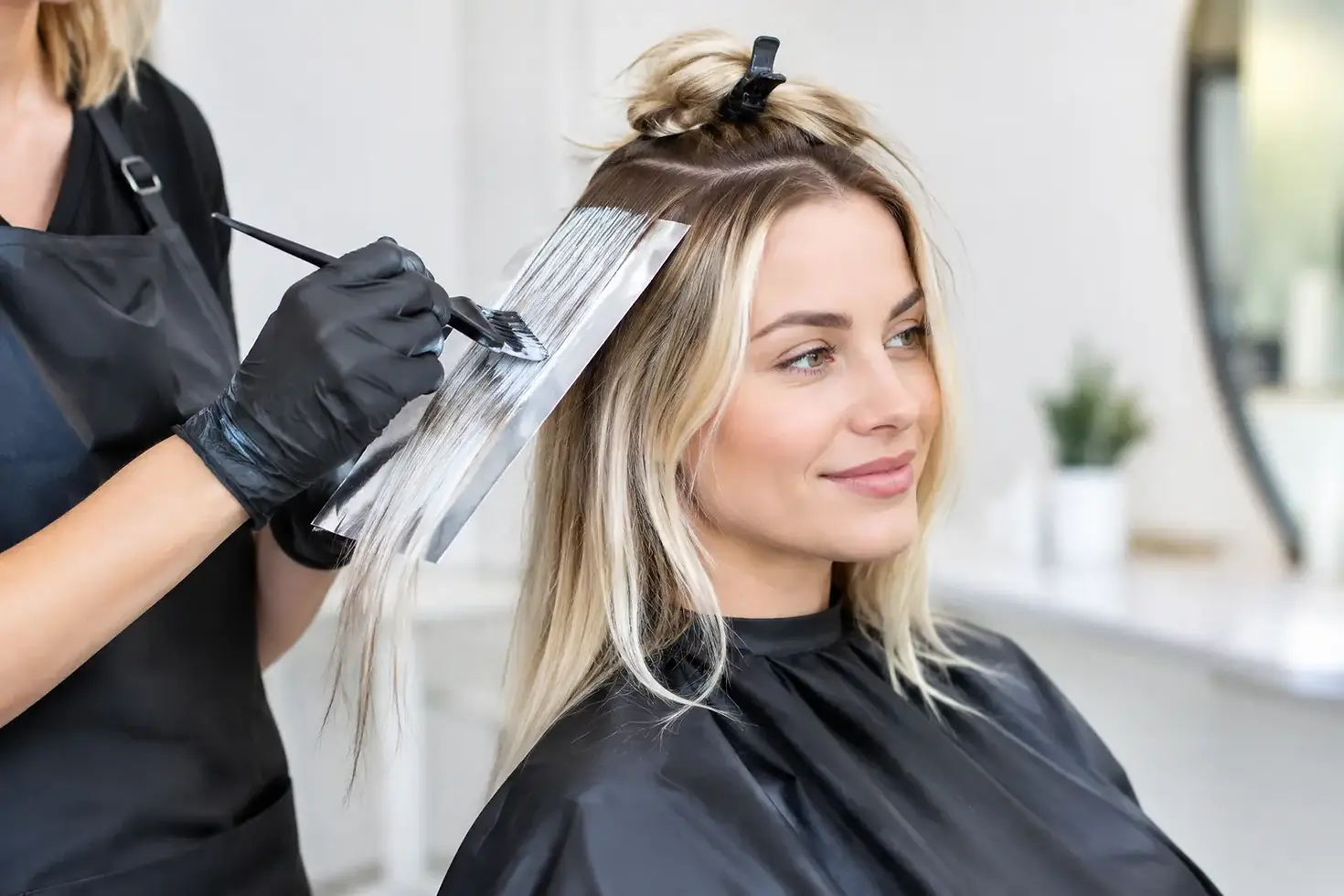
How to Go Blonde Without Damage at the Salon

A beautiful blonde result should feel luminous when you leave the salon and still feel like your hair. That is the real standard for how to go blonde without damage: not chasing the lightest possible result in one appointment, but creating brightness with a plan that respects your starting color, previous color history, texture, and everyday routine.
For some guests, that plan may mean a soft face-framing refresh and dimensional highlights. For others, it may be a carefully paced transition over several appointments. The healthiest blonde is rarely a copy-and-paste service. It is custom color designed around what your hair can safely do now and where you want it to go over time.
Start With an Honest Hair History
Your consultation is where healthy blonding begins. Before any lightener is mixed, your colorist needs to understand what has been on your hair, including professional color, box color, glosses, toners, henna, smoothing treatments, and extensions. Even color applied months ago can affect how the hair lifts.
This is especially important if you have dark permanent color, red tones, or uneven bands from previous services. Hair does not lighten evenly simply because the goal is blonde. It lifts in stages, often revealing warm underlying pigment along the way. Trying to force past those stages too quickly can compromise strength, softness, and shine.
Be specific about your lifestyle, too. If you swim often, heat-style daily, wear your hair in a ponytail for workouts, or need easy appointment spacing, those details shape the right approach. A blonde that works with your life will always be more beautiful than one that requires a maintenance routine you cannot realistically keep.
Choose a Blonde Goal Your Hair Can Support
The inspiration photo matters, but your natural level and existing color matter more. A natural brunette who wants an icy, all-over blonde will need a different journey than someone with a medium blonde base looking for sunlit dimension. Both can be gorgeous, but neither should be approached with the same formula or timing.
A skilled colorist looks beyond the headline shade. Is the brightness concentrated around the face? Is there depth at the root? Are the ends pale, or does the photo rely on lighting and styling? These details determine whether babylights, teasylights, balayage, traditional foils, or a combination of techniques will create the right effect.
For many women, a dimensional blonde is the healthiest and most wearable choice. Fine, intentional ribbons of brightness preserve some natural depth, create movement, and give the hair a softer grow-out. You can look significantly lighter without asking every strand to reach the palest level.
Why placement matters as much as lift
Strategic placement creates the impression of more blonde while limiting unnecessary processing. Brightness around the hairline, part, and ends can make the entire look feel fresh and elevated. Meanwhile, leaving selected interior sections and root areas untouched protects the overall integrity of the hair.
This is why a full blonding transformation does not always mean saturating every inch at every visit. Custom placement allows your colorist to build lightness where it has the greatest visual impact, then adjust future appointments according to how your hair responds.
Go Blonde in Stages When Needed
One long appointment is not automatically the healthiest route to blonde. If your hair is very dark, previously colored, fragile, or carrying uneven color, a gradual plan is often the better investment. Moving through controlled sessions gives the hair time to recover while allowing the colorist to refine warmth, correct uneven areas, and protect the most delicate lengths.
The trade-off is patience. You may not reach your final inspiration photo at the first appointment. What you gain is hair that still moves, holds a polished blowout, and looks healthy between visits. A rushed blonde can appear bright for a short time, then become dry, break-prone, or difficult to correct.
Your timeline may also change based on how your hair lifts. Some hair reaches a clean level of blonde efficiently, while other hair reveals stubborn warmth or has a more sensitive history. Good color work responds to what is actually happening in the chair, not to a promise made before the first foil is placed.
Protect the Hair During the Lightening Service
Professional lightening is a chemical service, so there is no honest way to call it completely damage-free. The goal is to minimize stress through precise application, thoughtful timing, appropriate developer strength, and conditioning support tailored to the service.
A careful colorist avoids overlapping lightener onto previously lightened hair whenever possible. Overlap is one of the biggest risks for fragile ends because those strands have already been processed. Sectioning, saturation, and timing also matter. Lightener must be applied evenly enough to lift predictably, but it should not sit longer than necessary.
At Creative Chemistry Salon, blonding services are designed as a complete experience, with custom glossing, nourishing treatment support, and a professional blowout. A gloss is more than a finishing touch. It can refine unwanted warmth, add reflective shine, and help the blonde look polished without repeatedly lightening the hair.
Do not confuse toner with more bleach
If your blonde starts looking brassy after several weeks, it may not need to be lightened again. Often, the hair simply needs a gloss or toner refresh. Lightening removes pigment; toning adjusts the visible tone of the pigment that remains. Knowing the difference helps you avoid processing your hair when a lower-commitment maintenance service can restore the look you want.
Build a Home Routine That Supports Your Color
The salon appointment establishes your blonde. Your home routine helps preserve it. This does not require an overflowing cabinet, but it does require using the right products consistently and treating lightened hair with more care than untreated hair.
Use a professional shampoo and conditioner selected for your hair’s needs, whether that is moisture, strength, color preservation, or a balance of all three. Wash with lukewarm water rather than very hot water, which can leave the cuticle feeling rough and contribute to faster tone fading. If you do not need to shampoo every day, give your hair an extra day between washes when possible.
Heat protection is non-negotiable before blow-drying, curling, or flat ironing. Keep hot tools at an effective but reasonable temperature, and avoid repeatedly passing an iron over the same section. A weekly mask can support softness, especially on the mid-lengths and ends, but too much protein can make some hair feel stiff. Your stylist can help you find the right balance.
Purple shampoo can be useful for controlling yellow tones, but it is not an everyday cleanser for most blondes. Overuse can leave hair dull, dry, or slightly violet, particularly on porous ends. Think of it as a targeted tone-maintenance tool, not a replacement for quality shampoo and conditioner.
Maintain Blonde Before It Becomes a Correction
A lived-in blonde may allow longer stretches between full lightening appointments, but it still benefits from intentional maintenance. Gloss appointments, face-framing mini highlights, and partial refreshes can keep your color bright without repeatedly processing the entire head.
Your best schedule depends on your look. A high-contrast, bright blonde may need more frequent refinement than a blended balayage with a soft root. If you want the lowest-maintenance option, tell your colorist at the beginning. They can build dimension and a seamless root area into the design instead of creating a look that depends on constant touch-ups.
Pay attention to early signs that your hair needs support: ends that tangle more than usual, a rough feel after washing, excessive breakage around the hairline, or a blonde that loses shine no matter how you style it. Addressing these changes early may mean adjusting your next service, adding treatments, trimming compromised ends, or taking a break from additional lightening.
The most flattering blonde is not defined by how pale it is. It is defined by how naturally it complements your skin tone, how beautifully it grows out, and how confident you feel wearing it on an ordinary Tuesday. Give your colorist a clear picture of your goal, be patient with the process, and let the health of your hair set the pace.


Comments